FR
FR  EN
EN DE
DE

Tiana
+86-13143789995
10 % de remise en points sur les commandes d'impressions personnalisées. Activer maintenant
Besoin d'aide ? Parlez à un expert en impression dès aujourd'hui. Trouver un magasin
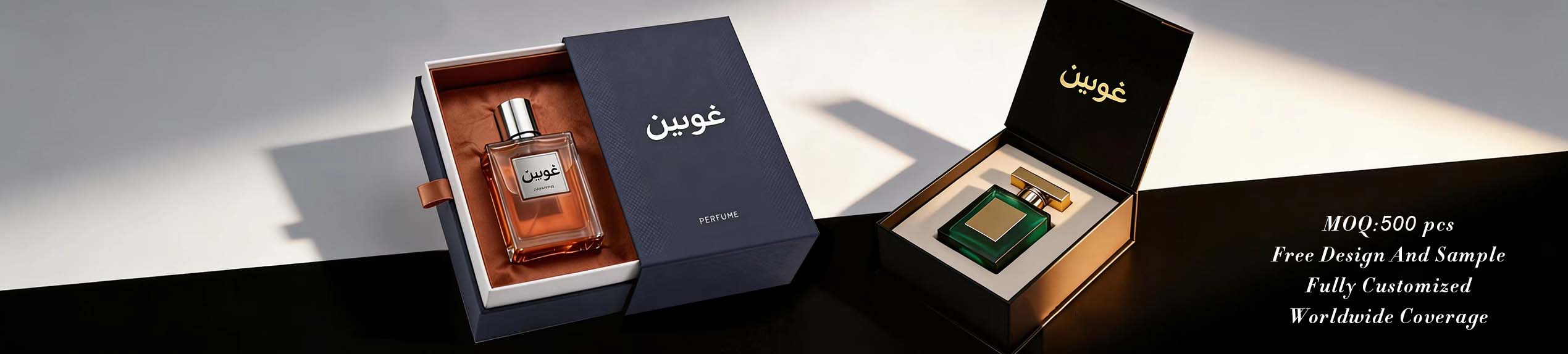
Custom Rigid Boxes vs. Corrugated Boxes: Which Is Better for Your Product?
Choosing between rigid boxes and corrugated boxes is one of the most common decisions packaging buyers face — and one of the most misunderstood. The answer isn't simple: each type serves different purposes, and the "right" choice depends entirely on your product, your brand positioning, and your supply chain requirements.
In our experience working with over 500 brands, we see buyers make the same mistakes repeatedly: choosing corrugated for a luxury product that demands rigid presentation, or investing in rigid boxes for products that ship long distances where protection matters more than shelf appeal.
Rigid boxes — also called setup boxes or gift boxes — are constructed from thick paperboard (typically 1.5mm to 3mm) that holds its shape without folding. Unlike folding cartons, rigid boxes don't rely on tuck folds or glue seams for structural integrity.
Key characteristics:
Corrugated boxes are made from fluted paper sandwiched between two flat linerboards. The fluted layer creates air pockets that absorb shock and distribute weight, providing excellent protection for shipping and storage.
Key characteristics:
Rigid boxes derive strength from dense chipboard. A 1.5mm grey chipboard box can support significant weight without deforming, but it cannot be crushed flat for storage.
Corrugated boxes derive strength from the fluted medium. E-flute (1.5mm thick) offers a good balance of print quality and crush resistance. B-flute (3mm) provides better puncture resistance.
For product protection during shipping, corrugated wins in most scenarios. The fluted structure absorbs impact energy far more effectively than solid board.
A corrugated mailer tested in drop conditions (60cm onto hard surface) showed 40% better cushioning than a rigid box of identical dimensions.
This is where corrugated has a decisive advantage. Corrugated boxes ship flat and are assembled at the point of use. A container that holds 50,000 flat corrugated boxes can ship only about 8,000 assembled rigid boxes — a six-fold difference in freight efficiency.
Rigid boxes provide a superior printing surface. The smooth, coated exterior accepts offset lithography with excellent color saturation and detail reproduction.
Corrugated boxes have a textured surface from the linerboard. While flexographic printing has improved, fine details and photographic quality are still challenging.
Data point: A 2024 packaging survey found that 78% of consumers rated rigid boxes as "premium" or "luxury," compared to only 23% rating corrugated boxes in the same categories. However, 85% of consumers rated corrugated boxes as "reliable" and "protective."
Our experts can help you select the perfect packaging solution for your product. Get a free consultation and sample comparison kit.
Contact Us TodayRigid boxes are made from thick paperboard (1.5mm-3mm) that maintains its shape permanently, offering premium appearance for retail display. Corrugated boxes use fluted paper between linerboards for superior protection during shipping.
Corrugated boxes are better for shipping because the fluted structure absorbs impact energy more effectively. Rigid boxes excel at display protection but don't provide the same cushioning during transit.
Yes, rigid boxes typically cost 2 to 5 times more per unit than corrugated boxes.


Blog Plan du site Xml politique de confidentialité
Droit d'auteur
© 2026 GuangZhou GooinPack Packaging Co., Ltd. Tous droits réservés
.  RÉSEAU PRIS EN CHARGE
Liens amicaux : Blogger
Laisser un message
Numériser vers WhatsApp :